
English| EUR
Suggested for you
More currencies
Choose a language
Mount Takao Onsen operates under a conditional acceptance policy for guests with tattoos, requiring coverage with waterproof patches or bandages. The facility welcomes inked visitors who follow these guidelines, making it one of the more accessible hot springs near central Tokyo. Understanding the coverage requirements and preparation steps ensures a smooth visit.
Quick answer
Mount Takao Onsen accepts guests with tattoos provided all ink is fully covered with waterproof patches, bandages, or specialized concealment tape before entering the bathing areas. Small tattoos under 10 cm can be covered with standard adhesive bandages available at most convenience stores, while larger pieces require medical-grade waterproof film or multiple overlapping patches. The facility does not provide coverage materials on-site, so visitors must bring their own supplies or purchase them beforehand at nearby drugstores.
Mount Takao Onsen adopted its coverage-based tattoo policy in 2018, a shift reflecting broader changes across Japanese bathing culture as international tourism expanded and younger domestic visitors with body art sought access to traditional facilities. Unlike the blanket bans still enforced at many ryokan and municipal bathhouses, the Takaosan Onsen system permits entry to inked guests willing to prepare appropriately, positioning the venue as a pragmatic middle ground between total exclusion and unrestricted access. The coverage requirement stems from longstanding cultural associations between tattoos and organized crime in Japan, a perception that remains strong among older generations even as attitudes soften. Management at mount takao onsen tattoo friendly policy addresses both the comfort of traditional guests and the business reality of serving hikers and travelers from countries where tattoos carry no social stigma. The rule applies uniformly regardless of tattoo size, design, or placement—decorative ink, memorial pieces, and traditional irezumi all require the same concealment before entering the gender-separated bathing halls or outdoor rotenburo overlooking the forested slopes. Waterproof medical tape and transparent film dressings work best for larger tattoos, maintaining adhesion even in hot water and high humidity. Standard fabric bandages lose their stick within minutes of submersion, and paper tape disintegrates entirely. Visitors with extensive body coverage sometimes layer multiple sheets of Tegaderm or Opsite, cutting custom shapes to match the contours of arms, backs, or legs. The preparation process can take fifteen to twenty minutes in the changing room, so factor that time into your visit if you plan to bathe before or after hiking the mountain trails. Staff conduct visual checks at the entrance to the bathing areas, and guests who enter without proper coverage may be asked to leave and reapply. The onsen does not stock adhesive supplies at the front desk or in vending machines, a deliberate choice that places the responsibility for compliance on the visitor. The nearest drugstore, Matsumoto Kiyoshi, sits a twelve-minute walk from the onsen entrance along Route 20, stocking a full range of waterproof medical dressings in its first-aid section. Buying supplies in advance—ideally before leaving central Tokyo—eliminates the risk of arriving unprepared after a long hike when the last thing you want is a twenty-five-minute detour. The policy extends to all indoor and outdoor bathing zones, including the sauna and cold plunge. Tattoo-friendly onsen policies like this one represent a compromise rather than full acceptance, and visitors should approach the experience with realistic expectations about the preparation required and the cultural context shaping the rules.
“The coverage requirement stems from longstanding cultural associations between tattoos and organized crime in Japan, a perception that remains strong among older generations even as attitudes soften.”
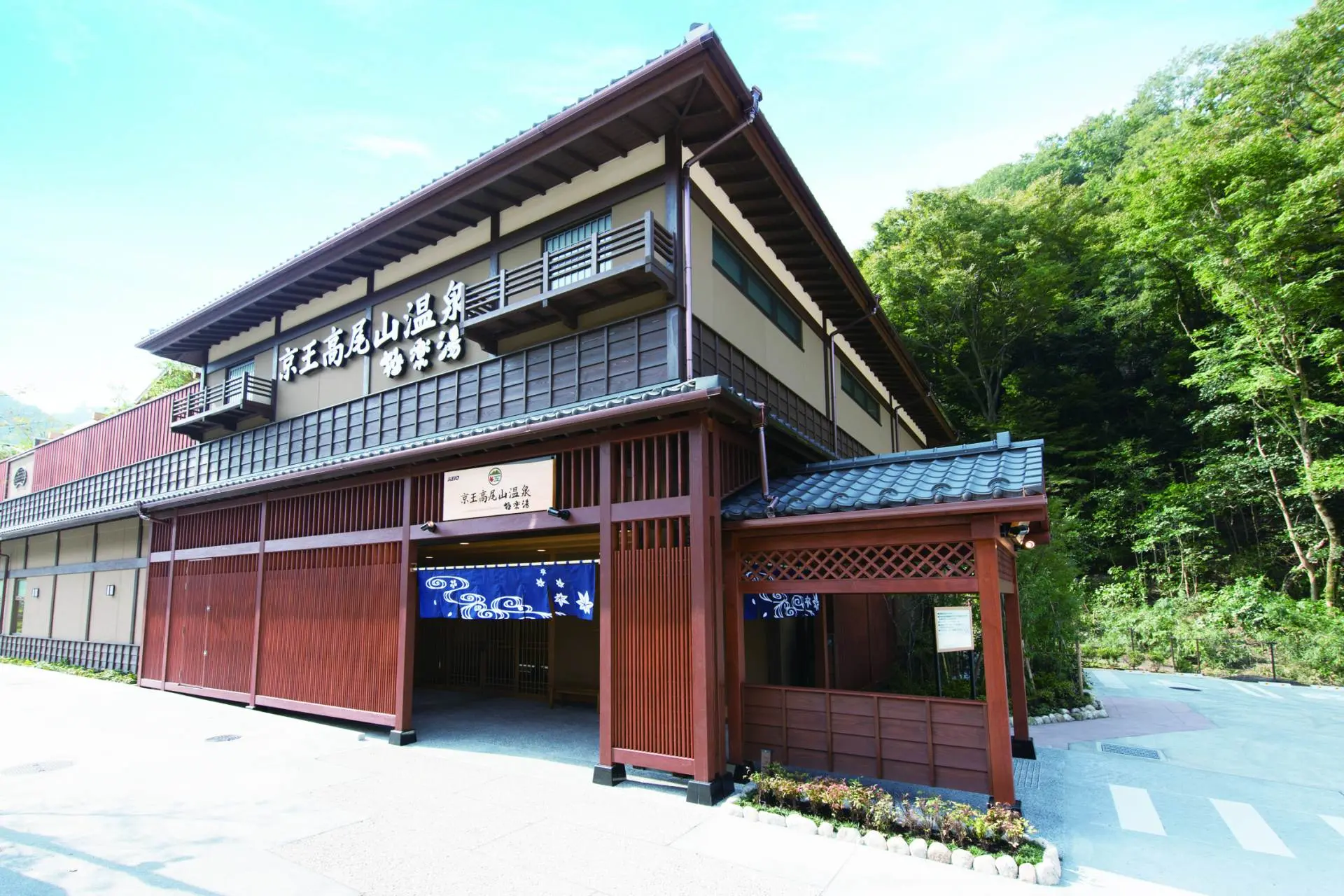
Keio Takaosan Onsen Gokurakuyu requires guests with tattoos to cover them completely with adhesive patches or wraps. Uncovered tattoos may result in entry refusal, regardless of size or placement.
Mount Takao Onsen maintains a consistent daily schedule throughout the week to accommodate hikers and visitors. The facility remains open during the same hours from Monday through Sunday.
The entrance fee for Keio Takaosan Onsen Gokurakuyu depends on the time and day of your visit. Rates are adjusted to account for higher demand during weekends and designated peak seasons.
Verdict: A typical adult pays 1,100 JPY on weekdays, with fees increasing on weekends and during peak seasons.
The best arrival window is 08:00–10:00. Arrive early to avoid heavy crowds of hikers returning from Mount Takao in the late afternoon.
—
Visiting on weekdays provides the most space for guests, including those with tattoos navigating facility policies. Arriving at opening avoids the post-hike surge.
Mild 15°C–22°C
Mount Takao attracts large crowds during cherry blossom season and pleasant spring weather. Plan to visit early to secure your spot before afternoon peaks.
Cool 10°C–18°C
The fall foliage draws significant numbers of visitors to the mountain. Morning arrivals are essential to maintain a comfortable experience before facilities reach capacity.
Verdict: Weekday mornings throughout the year, particularly during the shoulder months of April and November, provide the most consistent experience.
Keio Takaosan Onsen Gokurakuyu is located directly adjacent to Takaosanguchi Station. The most efficient approach is via the Keio Line, which provides direct access to the base of the mountain.
Keio Line to Takaosanguchi Station
From Takaosanguchi Station ticket gate
Ken-O Expressway to Takao-san Interchange
Exit the Takaosanguchi Station ticket gate and turn left to find the facility immediately adjacent to the station building. The official address is 2229-7 Takao-machi, Hachioji City, Tokyo, 193-0844, Japan.
Everything you need to know about mount takao onsen tattoo friendly
Mount Takao Onsen is not considered a mount takao onsen tattoo friendly facility, as guests with tattoos are strictly prohibited from entering the bathing areas. This policy is standard practice for many public bathhouses throughout Japan to maintain traditional bathing etiquette.
Unfortunately, those with tattoos, including small or covered ones, cannot access the public baths at this site, meaning it is not a mount takao onsen tattoo friendly location. Management requires all guests to adhere to this rule without exceptions for decorative or permanent ink.
While the bathing areas are not mount takao onsen tattoo friendly, guests with tattoos are still welcome to use the restaurant and relaxation areas within the complex. You may enjoy the mountain views and local cuisine without needing to access the hot spring baths.
Many hot springs and traditional bathhouses in Japan maintain a policy similar to this mount takao onsen tattoo friendly inquiry, often restricting access to ensure compliance with local customs. Visitors should always verify rules for specific Tokyo landmarks before arriving to avoid disappointment.
To enjoy a more tranquil experience after hiking, plan your visit during the best arrival window of 08:00–10:00. Arriving early helps you avoid the heavy crowds of hikers returning from the mountain trails in the late afternoon.
The standard adult weekday entrance fee is 1,100 JPY. Please note that higher rates apply on weekends and during peak seasons for all visitors.